Wednesday, 16 December 2015

We need to talk about tax

Overview:

The Scotland Act 2012 changed the nature of the tax raising powers enjoyed by Holyrood. When the Parliament was first created, it had the power to vary the basic rate of income tax by up to 3 percentage points either side of any rate that the Chancellor of the Exchequer set for the UK as a whole. If Holyrood cut the basic rate, it would receive a smaller block grant, and if it raised the basic rate, it would receive a larger block grant.

One of the main criticisms of this power was that it did not allow the Scottish Parliament effectively to spread any tax increase completely progressively across the income spectrum. Although the existence of the personal allowance meant that those on higher incomes would see a greater impact on their tax bill than the least well-off, the distributional impact was fairly flat, and a rise would, in percentage terms, mostly hit the professional middle class earning about £30-40k in today's money. The inability to alter the higher rate of income tax, which was responsible for a much larger share of high-earners' tax bill, meant that an increase in the basic rate would be regressive beyond that income bracket.

If, for example, that old power still existed, and the Scottish Government decided that, from 2016-17, it wanted to raise the basic rate of income tax by one percentage point, this is how it would affect Scottish taxpayers:


As you can see, the mildly progressive nature of that tax power quickly tails-off once taxpayers start paying the higher rate of tax instead. The maximum increase in someone's liability under the power is capped at £957, and that would require the full 3% increase to be introduced.

Impact of the Scotland Act 2012:

However, the original Scottish Variable Rate was never used, and fell into disuse before being replaced with a new power. Under the Calman Commission proposals, the Scottish rate of income tax was introduced. Under this arrangement, the Chancellor of the Exchequer levies a basic, higher and additional rate that is 10 percentage points lower for Scotland than for the rest of the UK. There is a corresponding cut to the block grant. The Scottish Government must then decide to what extent it wishes to "fill the gap" or even go beyond it.

There is a constraint to this power, which is that the Scottish rate of income tax must be the same across all income brackets. If you want to raise one tax rate, you must raise them all, and by the same percentage point increase. If the Scottish Government levies an SRIT of 10p, the rates in Scotland will be the same as those in the rest of the United Kingdom. If the Scottish Government wanted to increase the rate of income tax by 1%, they would levy an 11% SRIT. The effective tax rates in Scotland would then be 21%, 41% and 46%. Using the same scenario as before, the effect of this would be as follows:


The key difference from a distribution perspective, therefore, is that the Calman power removes the upper-ceiling on the additional liability that the Scottish Government can impose on the higher paid. This has the effect of making an increase in the SRIT modestly progressive across the board. Indeed, for someone earning around the minimum wage (£14kpa) would see their tax bill rise from 4.57% to 4.80% of their gross income, an increase of £32. This is in contrast to someone earning £60kpa, who would see a rise from 22.17% to 22.99% of their gross income being taken in income tax, an increase of £492. Put another way, such a rise would cut the take-home pay of someone on the minimum wage by £2.67 a month and someone on £60k by £41 per month.

What John Swinney said:

In his draft budget speech before Holyrood today, John Swinney said (emphasis added):

"Presiding Officer, today’s Draft Budget marks the first time that a Scottish Government will propose a Scottish Rate of Income Tax.

From April 2016, the UK Government will reduce the block grant by £4.9 billion with the partial devolution of income tax powers and at the same time switch-off 10 pence of income tax in Scotland.

I am required now to set a rate in Scotland.

The current power allows for one single rate to be set here in Scotland and applied equally to all three income tax bands – the basic, higher and additional rates.

This means that any rate set above 10 pence would increase the tax paid by all Scottish taxpayers. By its nature, exercising this power would have a disproportionate effect on the amount of tax paid by those on the lowest incomes.

Likewise, whilst any rate below 10 pence would cut the tax bill paid by all taxpayers, those on the highest incomes would see the greatest benefit."

This is nonsense:

Taken with the analysis above, the claims about "proportionality" in this statement simply do not stand. Indeed, it is internally inconsistent. The lock-step nature of the power means that only one of two things can be true. Either:

(a) All rates above 10p disproportionately increase the liability of the better off and all rates below 10p disproportionately decrease the liability of the better off; or
(b) All rates above 10p disproportionately increase the liability of the worst off and all rates below 10p disproportionately decrease the liability of the worst off.

Indeed, the empirical evidence above suggests that (a) is true and (b) is untrue. His justification for not increasing income tax is mutually inconsistent with his justification for not cutting it. In both cash and percentage terms, an increase in income tax in Scotland would place a burden predominantly on higher, not lower, earners.

If you were to be charitable, you could say that the proposed tax powers in the Scotland Bill would allow John Swinney to raise the taxes of the richest while either keeping the taxes of the poorest static or even to cut them. Under those proposals, the lock-step is being removed, which would allow the Scottish Government to raise the higher and/or additional rate without touching the base rate. But that doesn't stop John Swinney being more progressive now with the power he has; it simply means he can be more progressive later than he could just now. The notion that you should eschew progressive politics until you're given the power to be perfectly progressive is frankly abdication of governmental responsibility.

It should also be remembered that the Calman power will only be in place for 2 years. For the sake of 2 years, a 1% increase in the base rate would mean asking the poorest of Scots to pay the equivalent of a second class stamp every week more towards public services. For middle-income Scots you'd be asking less than the cost of their TV licence. For high-earning Scots, you'd be asking for the equivalent of a mobile phone contract or a satellite TV subscription, to fund public services. After that 2 years, you could cut or reverse the increase to basic rate payers. The rise in the personal allowance to £11k in 2017-18 would actually wipe-out any increased burden faced by minimum wage-earners in the second year of such a policy anyway.

The purpose of this is not to say that the SNP should raise this tax. It is to illustrate the absurdity of Swinney's stated justification against it. It is not credible to claim that "exercising this power would have a disproportionate effect on the amount of tax paid by those on the lowest incomes".

If John Swinney is to justify a government position which is anti-austerity: which thinks that the current level of resources made available to government programmes is not adequate, he needs a better explanation for why he has consciously not asked high-earning Scots to undertake a greater share of that burden. Raising the taxes of people on low and middle-incomes may not be popular, but as part of this specific tax power, it is both progressive and would raise the additional revenue he says Scotland badly needs. There are perfectly good, cogent, reasons for not wanting to raise personal income taxes, but he isn't offering them. The only logical conclusion we can draw is that John Swinney thinks it is more important that money stay in people's pockets, including Scotland's richest 10% of earners, than that the austerity "funding gap" be filled.

This is many things, but more progressive than the British consensus? It ain't. This stance is more at home with David Cameron and George Osborne than it is with Jeremy Corbyn or John McDonnell. That might be no bad thing, but let's at least level with the Scottish public that this is the reality we inhabit. The SNP are not a centre-left party on tax.

UPDATE: 23:06pm 16.12.15

I have decided to add a few graphs to display visually the impact of setting the SRIT at 11p instead of 10p. The wider the gap between the red line and the blue line, the greater the impact of the tax change on that particular group. As you can see, in both absolute and percentage terms, the 11p rate, proportionally speaking, hits those on higher incomes more. I have included a white line to indicate the national median wage: to the left of this line is the impact of the lowest 50% of earners in Scotland. As you can see, the gap is almost non-existent in all graphs for the lowest of earners, and is widest for higher earners. This indicates that an 11p rate would be a progressive step on the status quo. Unless John Swinney is arguing the more "right-wing" case that the problem is an 11p rate will raise no money, or lose money to the Scottish budget, and therefore necessitate a reduction in public service provision, there is no principled case against his introducing it.


Wednesday, 11 November 2015

Tax Credits and the Scotland Bill

The SNP introduced a proposed amendment to the Scotland Bill. It would have made the subject matter of the Tax Credits Act 2002 an exception to the general reservation of Social Security schemes. To understand what this means, we need to look at the way the Scotland Act works.

The Scotland Act

£££££
Under Schedule 5 of the Scotland Act, certain policy areas are designated as "reserved matters", which means Holyrood, in general, has no say over those issues, what the law is in relation to them, and how government agencies give effect to those schemes. In most instances, Westminster Government departments will have direct control over the way those matters operate, but sometimes the Scottish Government or Scottish local authorities will have a role in administration or implementation.

At the inception of the Scottish Parliament, welfare was a reserved matter, as was taxation, save for a specific income tax power. This means that social security has been legislated for across the UK in a fairly uniform way, and welfare schemes, tax credits, and tax has remained largely the same across the different nations.

What's New

The Scotland Bill changes this. A wide array of "exceptions" are being made to this general reservation. This will give the Holyrood Parliament the freedom to change, replace and create social security benefits in certain areas, and to top-up and change the way certain benefits that remain reserved, especially the housing component of Universal Credit, operate. This means, for example, more flexibility in mitigating the "bedroom tax".

For the benefits that are being fully devolved to Scotland, the funding for those will come from money that Westminster currently spends: it will be hived off into a separate fund, in much the same way as spending is for other areas at Holyrood at the moment, from which the Scottish Parliament can draw resources to pay for those benefits in Scotland. If the Scottish Parliament wishes to top-up a benefit or to create a new one, it can do so from its own resources.

It can pay for those new or top-up benefits in one of two ways: it can re-allocate spending from other parts of the Scottish Government's budget; or it can exercise Scotland's new tax powers to increase revenue that way.

The SNP's Amendment

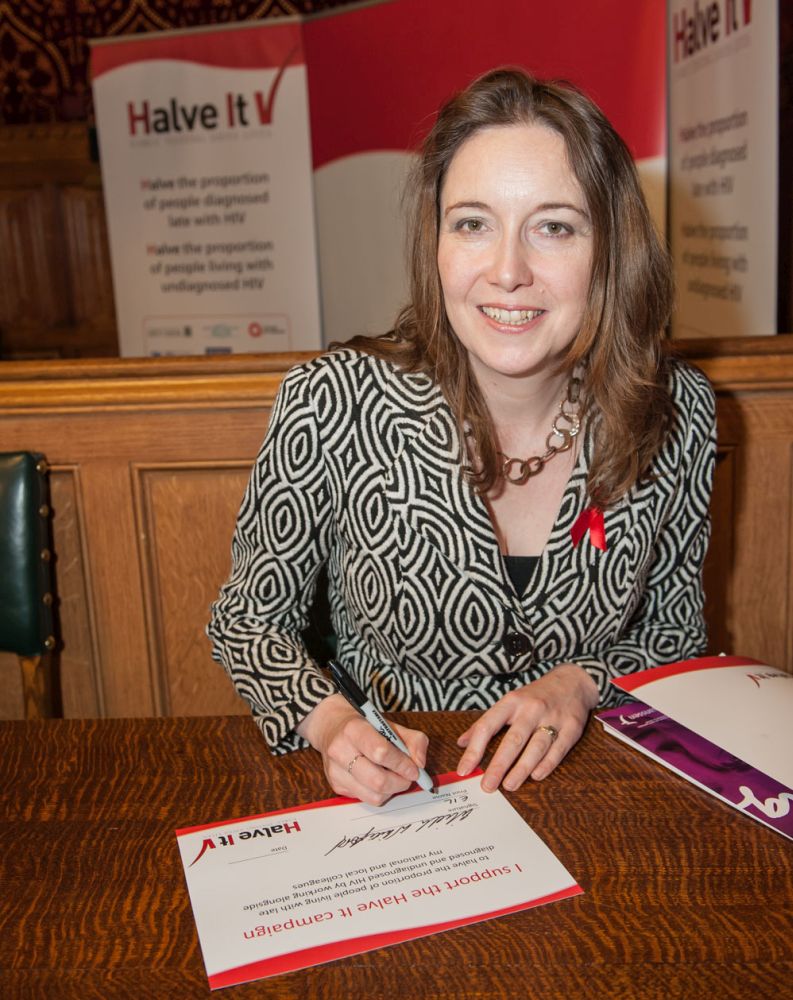
Eilidh Whiteford is responsible for the amendment
Eilidh Whiteford's amendment to the Act sought to make Tax Credits an exception. Quite how they envisaged this would operate is far from clear. The exceptions the UK Government has introduced for specific welfare benefit areas are a lot more detailed than this amendment was (see especially proposed ss20-28).


With each of the benefits that is already being devolved, considerable thought has been put into the mechanics of allowing Scotland to diverge from the rest of the UK. Questions like who is going to be responsible for the administration and the structure of those benefits, DWP, the Scottish Government, local authorities, have been examined at length to ensure the schemes are workable.

It does not appear that the same thought has been given to the devolution of tax credits. For one thing, and unlike most social security and welfare, tax credits are functionally administered through HMRC rather than the Department for Work and Pensions. It is not clear whether this amendment envisages that the Scottish Government would now administer and set the rules for tax credits in Scotland, or merely legislate variations on the UK scheme and ask HMRC to administer it for them. What role, if any, would Revenue Scotland have in the interplay between these taxes and the soon to be devolved personal income tax powers? It isn't clear.

It also is not clear how the SNP proposes the Scottish block grant is to be altered to take account of the fact that tax credits in Scotland would be different from those in the rest of the UK. This is where the nature of tax credits being different from other welfare could take on an added importance. It is not as straightforward as splitting rUK "spending" from Scottish "spending" with respect to tax credits as it is for other welfare payments. Would we decide what is "Barnettable" in this context?

This proposal, it should be clear, does not involve protecting the amount of money available in tax credits for Scottish workers and families. It merely proposes to devolve the subject matter. If the Scottish Government wanted to protect Scotland from George Osborne's cuts to tax credits, therefore, it would need to find the money from elsewhere: within its own budget. This change cannot force George Osborne to spend more money. At most it can ring-fence Scotland's share of what he decides he wants to spend on tax credits. Unless the SNP have an alternative proposal to the Barnett formula, that is the necessary effect of their amendment.

The Alternative

Understanding those implications is important, because it serves to show how little things would change compared with what the SNP could do regardless of whether or not tax credits are devolved. It is not necessary, as Alex Neil admitted in a Holyrood debate only a week ago, for Holyrood to have legislative control over tax credits in order to protect those who would be affected by tax credits cuts.

The "power to supplement" or to "create" new benefits, targetted at the families and workers affected, could fill that gap and would put the Scottish Government in no worse a position as to finding the money to pay for it. If anything, they would benefit from administrative clarity that tax credit devolution would not, as there would be no need to complicate the fiscal framework even further.

One of the major criticisms that the SNP have been directing towards the Secretary of State for Scotland is that the Scotland Bill's new fiscal framework is taking longer than anticipated to agree between the UK and Scottish Governments. What seems perplexing to me is why the SNP are therefore advocating amendments to the Scotland Bill, which do not give them any greater power to protect Scotland from tax credit cuts than they have already, which would serve to complicate and delay the fiscal framework negotiations. No doubt if that did happen, they would then complain to the press that the UK Government was breaking its promises to deliver new powers promptly to Holyrood.

The only policy decision that the SNP would be able to make with the devolution of tax credits that they could not make with their other welfare powers would be to cut the tax credits of people by more than George Osborne has. I doubt they plan to do this. If we were to be charitable, they may wish to taper tax credits more aggressively at the top of the income scale to protect those lower down. This would be a potentially welcome change, but the cynic in me suggests that is not their intention at all.

Conclusion

What this is endemic of is a desire by the SNP to keep the public debate in Scotland away from actual politics and policy decisions and into the realm of constitutional politics. Any situation where the SNP could mitigate the worst excesses of Westminster policy, but at a price, is distracted from by saying Scotland wouldn't have these tough decisions to make if only we had more powers.

The problem is, with powers comes responsibility. There may be perfectly sound reasons for saying that Scotland should control its own tax credits system. What is needed beyond that, though, is a government that is super clear on the detail about which winners and losers they would pick instead of the approach of the Westminster Government. The SNP want Scots to believe that they can fix all of the problems of Osborne's cuts without any of the drawbacks.

It speaks to a more fundamental characteristic of the way the SNP have governed Scotland in the last 8 years. They seem afraid to actually use Scotland's powers to try new things when it comes to deciding how we spend our money. Where they have made public sector reform, it's been to centralise, rather than to look under the hood. The danger is that if they use the powers and it works well, it risks showing Scotland that it literally can have the best of both worlds: policy better suited to its own needs while sharing resources and schemes where it is expedient to do so with the rest of the UK. Using the powers now also risks exposing the fact that the SNP have let a lot of things stagnate in Scottish society where they had the power to be radical. That rather undermines the rhetoric and rose-tinted vision of the utopian independence-based alternative.

The debate has to move on now. The Scottish Parliament has extensive powers. Sure it's not as powerful as I'd like it to be. But it has more than enough to get started. If the SNP really are right and these powers don't help Scotland: prove it. Try something new and then come back if it doesn't work. But this Scottish Government and many of its supporters are increasingly sounding like the petulant child that complains they got a red Power Ranger instead of a green one. You've got a Power Ranger. You can play with it or you can sulk.

Sunday, 27 September 2015

Choo Choo or Cuckoo?

I've been mulling over Labour's latest plans to "renationalise" the railways. Regular readers and friends will know that I'm not the type instinctively to support state ownership of services unless there is a compelling specific reason that regulation alone is insufficient to get the best service.

A Private Eye Classic
On the railways, though, I've always been more sympathetic to renationalisation. Maybe it's just that when I was reading The Railway Stories as a child, the post-nationalisation Fat Controller seemed a more jovial chap than his Fat Director predecessor. It does seem to be the case that fares outstrip general inflation, provide mediocre value for money compared to other forms of transport on short-haul, and even prove more expensive and time consuming than some flights between major cities. For example, if I were to book a couple of weeks in advance, I could travel from the centre of Glasgow to the centre of London and back by plane, including bus transfers at either side, for as little as £70 or so. Allowing for getting to and from airports, and check-in, the whole experience would typically take about 3 to 3.5 hours. By contrast, the cheapest train ticket from Glasgow Central to Euston, buying two singles, would be between £120 and £130, depending on how flexible I was prepared to be with the time of day. That journey would also take 4.5 hours. Even with a 16-25 Railcard, the airlines come in cheaper. If time and comfort were not a factor, I might as well be getting the 9.5 hour overnight Megabus and getting some change out of a £20 note.

It seems just instinctively ludicrous that rail travel has to be so uncompetitive with other forms of transport and, in Britain's rail's case, apparently so much less good value for money than that of other countries.

The case for renationalisation is, however, overstated. Virtually all of the ills of the British rail system seem to get blamed on it. Delays, cancellations, overcrowding, prices, cost to the taxpayer. Yet it all seems to ignore the fact that "privatisation" as we know it is actually quite a bit more complicated than people let on.

For instance, Andy Burnham blamed the fact he had to take a rail-replacement bus service to Labour Party conference on privatisation in a Tweet earlier today. I suspect he wasn't being entirely serious, but it is a myth that reliability problems are a consequence of privatisation. Rates of cancelled and late trains have fallen significantly since the era of British Rail, and in the small number of cases where the operators fail, they are heavily fined for it. This is part of the reason why, when franchise renewals come up, operators are so dependent on their reliability rates on other services, as any mismanagement significantly cuts their (narrow) profit margins, should fines become frequent. For my own part only once in my life have I been on a rail replacement bus service, and it was amusingly enough, while travelling to Munich from Prague on a state-owned DeutscheBahn express train! The grass is not always greener, it seems.

It's also worth pointing out that many cancellations and delays are not actually the responsibility of the train operators, like Virgin, Cross Country, Scotrail Abellio and the like. While these companies do run the services on a day-to-day basis, they are not in charge of two pretty big aspects of the railway system, namely the mechanical maintenance of the vehicles and the operation and maintenance of the rail infrastructure, like track, signalling and stations. If you're on a rail-replacement bus service, the chances are it has little if anything to do with the people whose franchises the Labour Party wants to end. It is more likely that it is an issue for which NetworkRail, a wholly state owned company, is responsible. If it is not a problem with the railway network itself, but with the rolling stock, that is primarily a failing on the part of a group of companies that, as far as I can see, Labour has not given any indication what they wish to do with. The people providing mechanical maintenance of trains are not Virgin Trains or Scotrail but Porterbrook and Eversholt. These are private companies with no franchising agreement with the government than can simply be "allowed to expire" before being replaced by a state-owned company.

If the Labour Party want to renationalise the railways, they'd have to either buy-out these companies or make their franchises refuse to lease their rolling stock in preference for a new state-owned supplier. This could create a litany of EU competition law problems for no real discernible benefit. One has to ask what the point is in remunerating up-front all these private investors when that money could instead go directly into rail expansion and electrification projects. Rolling stock isn't cheap, and there are legitimate arguments that the rolling stock companies are stuck with a business model that prevents prompt upgrading of rolling stock and that they extract profit from dated assets. But these companies are also heavily indentured in order to own this rolling stock in the first place. If they lack the capital to invest in new rolling stock, what good does it do to isolate them as a supplier before the government has the means to procure enough rolling stock of its own?

The best case for rail renationalisation for me is one of transparency. The system concocted by the Tories in the 1990s to try to generate an internal market was unnecessarily complex and seems to have lost the benefits of vertical integration of different parts of the supply chain. We probably wouldn't save much money in terms of subsidy of the operating companies if they were all state-owned, but bringing them back under public ownership would at least be a step in the direction of transparency about what parts of the system are profitable and what ones aren't. The drawback is, of course, that if part of the system is unprofitable, it's no longer the case that private companies are assuming part of the risk and the consequences, subsidy notwithstanding.

The gamble of renationalisation is that, with the best will in the world, some of the capital that makes new infrastructure possible will dry-up. Rail projects are extremely expensive at the best of times (see both HS2 and CrossRail) and if you start removing companies that own often debt-secured rolling stock, which are owned mostly by pension funds, from the picture, government has to make a much bigger contribution in the short-term to keep services running at their current levels. East Coast was a success in public ownership because it cut its cloth and had a new management system put in place. Sometimes governments will be a better arm's length manager for a particular franchise at a particular stage in a route's lifetime. Attempts to extrapolate that isolated success network-wide, without a clear answer to the question of how Labour proposes to change the other stages in the rail delivery process, however, is just populist and nostalgic.

Monday, 20 July 2015

Piercing the Secular Veil

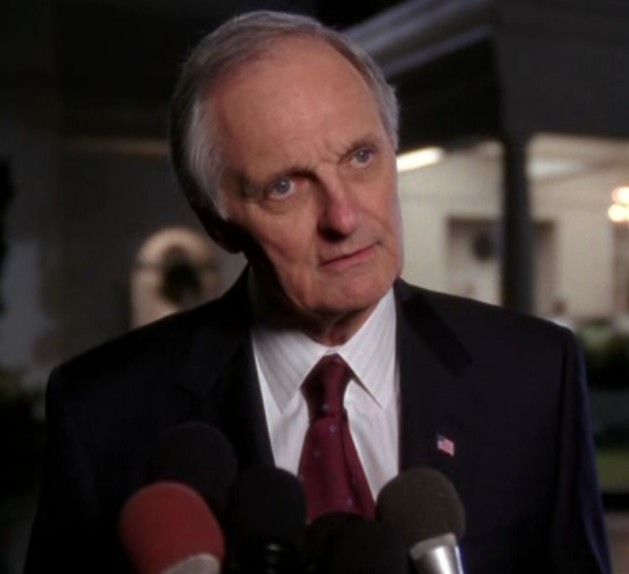
There is an episode of the American Presidential drama, The West Wing, called "In God We Trust". It follows the challenges of Arnold Vinick, a liberal Republican, who finds himself in hot water with the religious right of his party, particularly on the question of his stance on abortion. Arnie's religiosity had very noticeably faded with the passing years, but just as in the real world of American politics, the role religion had in public life remained every bit as potent. It emerges, when Reverend Butler, one of his Republican primary candidates invites him to come to his church to pray for divine wisdom, that Vinick had not attended church for quite some time.

Facing down the pressures from within his own party, Vinick eventually provides a robust, if unpopular, response to the media storm that ensues. Responding to those that seek to shoehorn religious debate into politics, he ends a press interview with the totemic rebuke:
"I don't see how we can have a separation of church and state in this government if you have to pass a religious test to get in this government.

So every day until the end of this campaign, I will answer any question on government. But if you have a question on religion, then please, go to church."

As a secular liberal, I have a significant and instinctive affinity with Vinick's sentiment. It feels right that religion should, for the most part, be a private matter, and not something that the state is concerned with. I am also weary of any person or group which seeks to use organised religion for explicitly political purposes.

The American experience is, in many respects, the total reverse of the British one. Despite lacking a separation of church and state, there is a much more limited role for religion in political life. Far from being an electoral asset, publicly professing religious belief is arguably a hindrance to politicians on left and right alike. When Alastair Campbell said of the Blair government that "we don't do God" it was a reflection of British public life. Religion is seen as an unwelcome distraction from broader social issues which transcend the theistic loyalties of the people on this island.

It is against that culture that the storm in the Liberal teacup brewed this week. Tim Farron, the new party leader, is openly a committed, born-again, evangelical Christian, and has been since early on in his adult life. Against a tide of increasing irreligion, and in a political environment where religion is increasingly seen as the preserve of the conservative right, this makes him markedly atypical.

Any secular liberal would see no problem with Tim being a Christian and the leader of a Liberal party. Both of my parents, who are Church of Scotland Ministers, recently joined the Liberal Democrats. The late Charles Kennedy was Catholic. Christianity and Liberalism are not incompatible. The two can exist perfectly constructively. Anyone who suggests otherwise probably doesn't understand secularism or liberalism, and the toleration that binds them together.

There ought not even to be a problem with Tim being an evangelical Christian. Certainly it is easier to reconcile theological liberalism with political liberalism, reading religious texts more as historical documents reflective of the morality of their time than purely and unwaveringly the universal diktats of the relevant deity. Evangelical, or more literalist scriptural interpretation, is more hard-edged in its implications for personal morality, but crucially it does not, in and of itself, necessitate the imposition of one's personal morality upon others. An evangelical Christian might insist on abstinence before marriage, and might privately disapprove of those who do not, but few would call for criminalisation or insist that the rest of society ought in some other way to be held to that moral standard.

Secular liberalism does provide a firewall, or a demarcation, that makes it possible hold yourself to what you see as a "higher" moral standard than you do others. Views can be held privately, and are not "illiberal" except insofar as they impinge upon the freedom of others to do the same. It's harm principle 101.

Where things get difficult is when this firewall breaks-down. Many liberals would like to think that this firewall is impregnable. If people who believe same sex relations are sinful or immoral nonetheless treat those in those relationships equally with others, the argument goes, their liberal credentials are unscathed.

The reality is somewhat more complicated. Religion does not manifest itself as a purely private endeavour. The nature of organised religion, in particular, means that theological views gain a social power. It is this social power that often facilitates, even if unintentionally, the stigma and otherisation and discrimination against certain minority groups, including the LGBT+ community. It also does a great deal of good. Much of th einfrastructure of philanthropy and charitable work is sustained and supported by religious groups, as is the cause of vulnerable and persecuted groups across the world, who get precious little attention elsewhere. The social power of religion and faith is not only negative, but those invoking it have to be mindful that it is a double-edged sword and that scrutiny of it is both expected and necessary in a free society.

Religion is not unique in this respect. Private moral beliefs, when shared or expressed in a community, do carry social power, and serve to "enslave by conformity" to use the traditional Liberal lingo. Organised religion is merely the most potent example of this social power in respect of these kinds of issue. The social effect of knowing or believing that others in your community, be it a political one, a religious one, a sporting one or something else, thinks that acting upon your sexuality is sinful, is significant, especially for young people who are coming to terms with it. They inhabit a world where the historical legacy of parts of organised religion, both in its teachings and its soft power, has shaped a world in which sexual and gender minorities are seen on some level as abnormalities or immoral.

This is why I found it so depressing to see some Liberal Democrats dismiss the concerns of other members as a zealous obsession with gay rights. The cause of liberalism requires us to be a lot more demanding as to what a secular liberal society really is. It's not just about toleration and rights. It is also about parity of esteem. It's not enough simply to be against the gay blood ban and for the legalisation of same sex marriage for liberalism to triumph. We also need individuals to feel empowered in the parts of their lives that legislation cannot touch. Until homosexual relationships are responded to with an indifferent shrug, there remains work to do. When someone says, or implies, that they think that by acting on your sexuality you are in some sense sinful, that makes them feel unwelcome and unnatural. That sets back their liberation and, even if unintentionally, pressures them to conform with traditional gender and sexuality roles.

For what it's worth, I think Tim is conscious of the need for wider social acceptance and I have no doubt that in his personal dealings with members of the LGBT+ community he has been supportive and inclusive in emotional and practical ways. Aspects of his voting record on some social issues remain to be fully explained and might reasonably give people cause for caution as to whether his private views have influenced his public actions, be they his interviews, writings or Parliamentary record. On same sex marriage, we can extend benefit of the doubt given his support at second reading.

But his handling of the God question has been poor, and has upset and alienated a lot of people who feel vulnerable in our society: tolerated but not accepted. There were two options open to him. If he does not believe that homosexual relationships are sinful, he could have just said so. If he does believe it, though, the secular liberal firewall needs to be all the stronger. Talking about everyone being sinners is profoundly unhelpful and did nothing to close off the concerns that his private morality seeps into his public and that there is a tension between what his God demands and what liberalism demands. If the firewall were to hold, his answer needed to be in the spirit of Arnold Vinick:
"Every day I am the leader of this party, I will answer any question on government. But if you have a question on religion, then please, go to church."

Full Disclosure: I self-describe as agnostic, believing the existence of God to be unknown and unknowable and seeing no reason why a deity would be so narcissitic as to demand or expect my loyalty. I was brought up a Christian as the son of two theologically liberal Church of Scotland ministers. I sometimes go to church, out of ties to family and friends and sometimes out of a need for self-exploration. I voted for Norman Lamb, but Tim's religiosity had no bearing on that decision.

Monday, 13 July 2015

When's an English matter no' an English matter?

The SNP have decided that they are going to vote against the efforts of the Conservative Government to relax the hunting ban in England.

This is a significant departure from a self-denying ordinance traditionally adopted by their Westminster representatives, who have committed not to vote on English-only matters. That position was a principled one and perfectly reasonable for them to adopt in the aftermath of devolution, especially given their broader belief that Scotland should be in complete control of its own domestic affairs and that English and Welsh MPs should not be involved in those decisions.

There is also a perfectly principled argument for adopting no such self-denying ordinance. England has declined to demand for itself a Parliament or regional assemblies with the legislative competence to deal with their own domestic affairs. As such, it is no more illegitimate for Scottish MPs to vote on matters only affecting England than it was for English MPs to vote on policy matters affecting Scotland before devolution.

This is not the justification given, however. Angus Robertson is trying, disingenuously, to present this as a response to the government's refusal to entertain opposition amendments in the early stages of the Scotland Bill.


There is a tenuous effort, first and foremost, to suggest that the Tory proposals for the ban south of Gretna have any bearing on the Scottish debate about the same domestic issue. The notion that the English debate would have any bearing on what the Holyrood Parliament can or will do in this area is self-evidently nonsense. The original Hunting legislation for Scotland was actually passed by Holyrood, completely separately from that pushed down South. It is a devolved matter and the law in England will have no bearing whatsoever on it.

This is quite different from a situation where a predominantly English Bill has ancillary effects on issues within the purview of Holyrood. It is not even a case where the Scottish block grant is directly or indirectly affected by a change to English departmental spending. It certainly is not like welfare votes, which relate to reserved matters that affect directly people living in Scotland.

The motivation here seems to be entirely a desire to give the Tories a bloody nose. Now I'm in favour of giving this government as many bloody noses as possible. But in doing so, any Scot who condones Scottish MPs voting on English hunting must also accept that it is perfectly legitimate and reasonable for this government's English MPs to vote on and have some control over the legislative agenda for the Scotland Bill and any amendments made to it. The future settlement for Holyrood has significant constitutional, governmental, and practical implications for UK citizens in England, Wales and Northern Ireland, and to deny the legitimacy of the House to involve all of its members is really to ignore the necessary implications of Scotland voting No on 18th September 2014

I understand the frustration of the SNP at their total impotency at Westminster, despite having won 56 of Scotland's seats. The solution to that, though, is not to snipe from the sidelines, but to get involved where the business of Parliament is really going to get done in this 5-year term. The House of Lords. Already the Labour Party and the Liberal Democrats are showing that the Upper Chamber is where real influence will come on government legislation, where the Tories lack a majority. They haven't just been given a bloody nose in "the other place"; actual changes to legislation have happened and look like happening. It was the House of Lords that provided some of the most effective resistance and improvements to government legislation in the last Parliament and already looks likely to trump the Commons Tory majority on votes at 16.

If they are prepared to bend their democratic principles, in their self-denying ordinance on English Votes for English Laws, there is no good reason for them not to do so on putting forward nominees for the Lords. It is perfectly consistent, and principled, to say that you oppose the appointed nature of the Lords, but also to acknowledge in the absence of support for its reform or abolition, that it is necessary or advantageous to work within that system to reform it and other laws.

The SNP have got used to having power without a great deal of effective responsibility. The question they need to answer is whether they actually want responsibility. With effective responsibility comes the power to make some significant changes to the way Britain is governed, and to improve the lives of Scots and the rest of the UK alike in really important ways in the next five years. But responsibility also means accepting the limits of what can be achieved, and it also involves a bit more humility about their own record at Holyrood. If they want to make big and real changes to the way Scotland is governed and to transform the lives of those living in Scotland, the politics of distance, deflection and demonisation has to end.

Their approach at Westminster is only part of the story, but is symptomatic of an approach which prioritises the popularity of the SNP over effective if unpopular policy-making. One day, the SNP is going to have to decide: is it more important to be electorally popular or to do the right thing by Scotland?