
Showing posts with label welfare. Show all posts

Wednesday, 11 November 2015

Tax Credits and the Scotland Bill

The SNP introduced a proposed amendment to the Scotland Bill. It would have made the subject matter of the Tax Credits Act 2002 an exception to the general reservation of Social Security schemes. To understand what this means, we need to look at the way the Scotland Act works.

The Scotland Act

£££££
Under Schedule 5 of the Scotland Act, certain policy areas are designated as "reserved matters", which means Holyrood, in general, has no say over those issues, what the law is in relation to them, and how government agencies give effect to those schemes. In most instances, Westminster Government departments will have direct control over the way those matters operate, but sometimes the Scottish Government or Scottish local authorities will have a role in administration or implementation.

At the inception of the Scottish Parliament, welfare was a reserved matter, as was taxation, save for a specific income tax power. This means that social security has been legislated for across the UK in a fairly uniform way, and welfare schemes, tax credits, and tax has remained largely the same across the different nations.

What's New

The Scotland Bill changes this. A wide array of "exceptions" are being made to this general reservation. This will give the Holyrood Parliament the freedom to change, replace and create social security benefits in certain areas, and to top-up and change the way certain benefits that remain reserved, especially the housing component of Universal Credit, operate. This means, for example, more flexibility in mitigating the "bedroom tax".

For the benefits that are being fully devolved to Scotland, the funding for those will come from money that Westminster currently spends: it will be hived off into a separate fund, in much the same way as spending is for other areas at Holyrood at the moment, from which the Scottish Parliament can draw resources to pay for those benefits in Scotland. If the Scottish Parliament wishes to top-up a benefit or to create a new one, it can do so from its own resources.

It can pay for those new or top-up benefits in one of two ways: it can re-allocate spending from other parts of the Scottish Government's budget; or it can exercise Scotland's new tax powers to increase revenue that way.

The SNP's Amendment
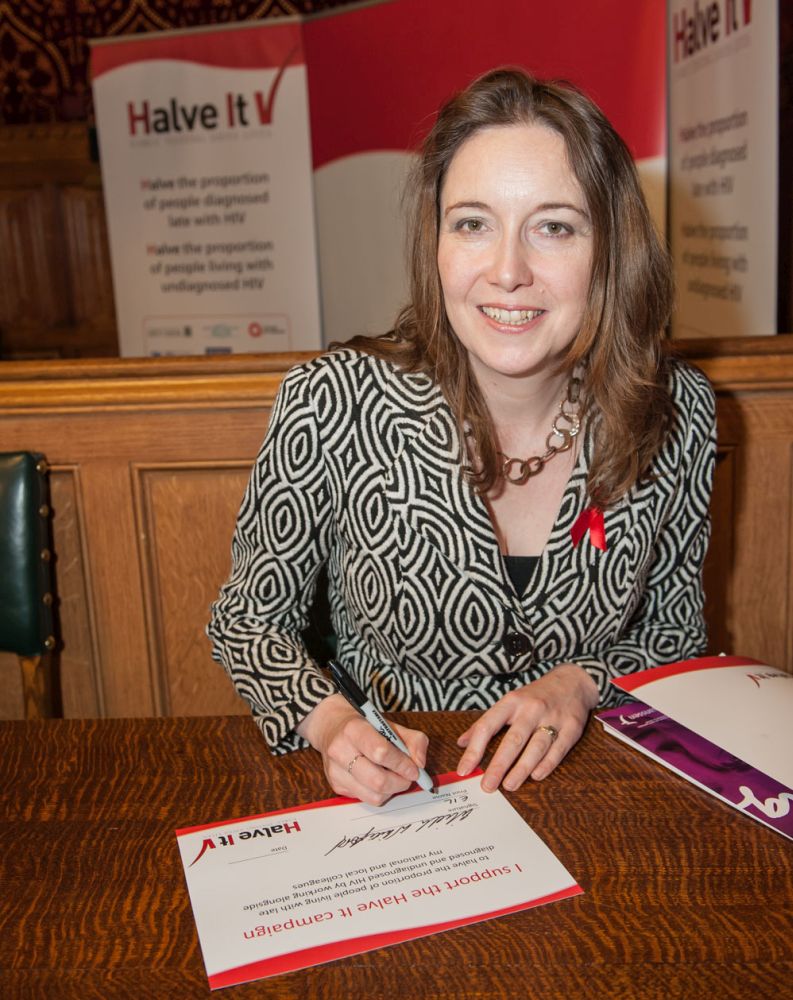
Eilidh Whiteford is responsible for the amendment
Eilidh Whiteford's amendment to the Act sought to make Tax Credits an exception. Quite how they envisaged this would operate is far from clear. The exceptions the UK Government has introduced for specific welfare benefit areas are a lot more detailed than this amendment was (see especially proposed ss20-28).


With each of the benefits that is already being devolved, considerable thought has been put into the mechanics of allowing Scotland to diverge from the rest of the UK. Questions like who is going to be responsible for the administration and the structure of those benefits, DWP, the Scottish Government, local authorities, have been examined at length to ensure the schemes are workable.

It does not appear that the same thought has been given to the devolution of tax credits. For one thing, and unlike most social security and welfare, tax credits are functionally administered through HMRC rather than the Department for Work and Pensions. It is not clear whether this amendment envisages that the Scottish Government would now administer and set the rules for tax credits in Scotland, or merely legislate variations on the UK scheme and ask HMRC to administer it for them. What role, if any, would Revenue Scotland have in the interplay between these taxes and the soon to be devolved personal income tax powers? It isn't clear.

It also is not clear how the SNP proposes the Scottish block grant is to be altered to take account of the fact that tax credits in Scotland would be different from those in the rest of the UK. This is where the nature of tax credits being different from other welfare could take on an added importance. It is not as straightforward as splitting rUK "spending" from Scottish "spending" with respect to tax credits as it is for other welfare payments. Would we decide what is "Barnettable" in this context?

This proposal, it should be clear, does not involve protecting the amount of money available in tax credits for Scottish workers and families. It merely proposes to devolve the subject matter. If the Scottish Government wanted to protect Scotland from George Osborne's cuts to tax credits, therefore, it would need to find the money from elsewhere: within its own budget. This change cannot force George Osborne to spend more money. At most it can ring-fence Scotland's share of what he decides he wants to spend on tax credits. Unless the SNP have an alternative proposal to the Barnett formula, that is the necessary effect of their amendment.

The Alternative

Understanding those implications is important, because it serves to show how little things would change compared with what the SNP could do regardless of whether or not tax credits are devolved. It is not necessary, as Alex Neil admitted in a Holyrood debate only a week ago, for Holyrood to have legislative control over tax credits in order to protect those who would be affected by tax credits cuts.

The "power to supplement" or to "create" new benefits, targetted at the families and workers affected, could fill that gap and would put the Scottish Government in no worse a position as to finding the money to pay for it. If anything, they would benefit from administrative clarity that tax credit devolution would not, as there would be no need to complicate the fiscal framework even further.

One of the major criticisms that the SNP have been directing towards the Secretary of State for Scotland is that the Scotland Bill's new fiscal framework is taking longer than anticipated to agree between the UK and Scottish Governments. What seems perplexing to me is why the SNP are therefore advocating amendments to the Scotland Bill, which do not give them any greater power to protect Scotland from tax credit cuts than they have already, which would serve to complicate and delay the fiscal framework negotiations. No doubt if that did happen, they would then complain to the press that the UK Government was breaking its promises to deliver new powers promptly to Holyrood.

The only policy decision that the SNP would be able to make with the devolution of tax credits that they could not make with their other welfare powers would be to cut the tax credits of people by more than George Osborne has. I doubt they plan to do this. If we were to be charitable, they may wish to taper tax credits more aggressively at the top of the income scale to protect those lower down. This would be a potentially welcome change, but the cynic in me suggests that is not their intention at all.

Conclusion

What this is endemic of is a desire by the SNP to keep the public debate in Scotland away from actual politics and policy decisions and into the realm of constitutional politics. Any situation where the SNP could mitigate the worst excesses of Westminster policy, but at a price, is distracted from by saying Scotland wouldn't have these tough decisions to make if only we had more powers.

The problem is, with powers comes responsibility. There may be perfectly sound reasons for saying that Scotland should control its own tax credits system. What is needed beyond that, though, is a government that is super clear on the detail about which winners and losers they would pick instead of the approach of the Westminster Government. The SNP want Scots to believe that they can fix all of the problems of Osborne's cuts without any of the drawbacks.

It speaks to a more fundamental characteristic of the way the SNP have governed Scotland in the last 8 years. They seem afraid to actually use Scotland's powers to try new things when it comes to deciding how we spend our money. Where they have made public sector reform, it's been to centralise, rather than to look under the hood. The danger is that if they use the powers and it works well, it risks showing Scotland that it literally can have the best of both worlds: policy better suited to its own needs while sharing resources and schemes where it is expedient to do so with the rest of the UK. Using the powers now also risks exposing the fact that the SNP have let a lot of things stagnate in Scottish society where they had the power to be radical. That rather undermines the rhetoric and rose-tinted vision of the utopian independence-based alternative.

The debate has to move on now. The Scottish Parliament has extensive powers. Sure it's not as powerful as I'd like it to be. But it has more than enough to get started. If the SNP really are right and these powers don't help Scotland: prove it. Try something new and then come back if it doesn't work. But this Scottish Government and many of its supporters are increasingly sounding like the petulant child that complains they got a red Power Ranger instead of a green one. You've got a Power Ranger. You can play with it or you can sulk.

Monday, 8 June 2015

This is not the veto you were looking for

A common refrain from the Scottish National Party in recent days has been that the Scotland Bill is not living up to what was agreed in the Smith Commission. The key complaint seems to be that there is a "veto" for the Secretary of State for Scotland over the introduction of or alteration to welfare benefits falling within the Holyrood Parliament's competence.

What they appear to be talking about is a restriction on the Scottish Ministers making regulations concerning devolved aspects of Universal Credit. Here is what the Smith Commission said about it:

"43. Universal Credit (UC) will remain a reserved benefit administered and delivered by the Department for Work and Pensions (DWP). Within this framework, the Scottish Parliament will have the powers outlined in paragraphs 44 to 45 in relation to UC.

44. The Scottish Government will be given the administrative power to change the frequency of UC payments, vary the existing plans for single household payments, and pay landlords direct for housing costs in Scotland.

45. The Scottish Parliament will have the power to vary the housing cost elements of UC, including varying the under-occupancy charge and local housing allowance rates, eligible rent, and deductions for non-dependents

46. The power to vary the remaining elements of UC and the earnings taper will remain reserved. Conditionality and sanctions within UC will remain reserved."

The key points are therefore as follows:

1. Universal Credit is to remain, generally, a reserved matter, administered mostly by the UK Government's DWP.
2. The Scottish Government is to be given some flexibility in certain administrative and minor policy provisions in relation to it.

Now let's look at the provision in the Scotland Bill to which this "veto" relates. It appears to relate to the power to make regulations in respect of how much housing benefit someone is entitled to, who it's to be paid to, and how frequently. Pretty dry stuff. Sections s24(4) and 25(3) are the ones that contain this so-called "veto" power. Their wording is identical. It is as follows:

"The Scottish Ministers may not exercise the function of making regulations to which this section applies unless—
(a) they have consulted the Secretary of State about the practicability of implementing the regulations, and
(b) the Secretary of State has given his or her agreement as to when any change made by the regulations is to start to have effect, such agreement not to be unreasonably withheld."

The wording of this, to me, seems pretty clear. The nature of the duties and rights here do not relate to whether or not a set of regulations may be made, but when their implementation should take place. It is an administrative function to ensure DWP is ready to alter Universal Credit payments in line with whatever regulations the Scottish Government decides to make. This explains the consultation on the "practicability" of the "implementation" of the regulations in sub-clause (a), and suggests that the requirement to consult does not relate to whether or not any change should happen. This is re-enforced by sub-clause (b) which restricts the Secretary of State's ability to withhold agreement "as to when any change made... is to start to have effect".

This is important, because it means when Stewart Hosie said, on the Daily Politics earlier today:

"If the Secretary of State, the sole Tory left in Scotland, decided not to give his agreement, for whatever reason, he or she has a de facto veto and therefore the spirit of the Smith Commission is breached before we even get going."

He was wrong. Firstly, because refusal cannot be "for whatever reason". It must relate to the practicalities associated with the timing of the implementation of the regulations. This is not a veto. If the Secretary of State refused to give his consent because he or she disagreed with the principle of housing benefit payments being increased, or made more frequently, his or her decision could be subjected to legal challenge as using a power for an improper purpose, or for taking into account irrelevant considerations, two well-established common-law grounds for judicial review, and ordered to be retaken.

This is re-enforced further by the second part of the sub-clause, which provides that "such agreement [is] not to be unreasonably withheld". This, in effect, means that if the Secretary of State is to withhold consent, he or she must be able to show that it was reasonable to withhold consent with respect to the timing of the implementation of the regulations. He or she would likely need to show evidence of administrative difficulties meeting the demands of the Scottish Ministers' regulations from the DWP, and failure to do so might additionally have the decision struck down by the courts for irrationality if no such obstacles can be identified.

If the Scottish Government's powers with respect to Universal Credit were to be administered by a Scottish Government Department, it might be reasonable to say that consent in some form of the UK Government was unnecessary and unreasonable. This is not, however, what the Smith Commission proposed. It proposed that Universal Credit be a matter for the Department for Work and Pensions. This provision is one intended to facilitate logistical integration between Holyrood regulations and Westminster departments. It's not a political ploy to stop Scottish politicians implementing different welfare policies from the rest of the UK.

Put at its simplest: this is not a veto. This is what Smith promised.

Friday, 11 July 2014

Taking Responsibility

Those who have followed my previous utterances on Scottish independence will know that I am sceptical of a lot of the rhetoric and claims made by the SNP and the Yes campaign. I don't describe myself as centre-left, unlike, probably, most politically active Scots in that movement. I don't consider myself to be a nationalist, even of the civic variety. I don't agree with many of the claims of either campaign that Scotland will be a significantly more or less prosperous society if it becomes independent. I don't even agree that we will be a noticeably more equal society if we become independent.

A common argument I hear, with which I have considerable difficulty, is the suggestion that we should vote Yes to create a more equal society. We are told that the policies of the Tories, especially on welfare, are strongly opposed by Scotland and that we need to control welfare to build a society that adequately protects the most disadvantaged. It seems superficially attractive. It is true that the two parties Scotland votes for most strongly, the SNP and Labour, do adopt a less hostile attitude, in terms of rhetoric and with respect to some specific policies on the question of welfare than do the Tories. This does not, however, appear to translate into actual attitudes towards welfare. When polled on actual policies, the majority of Scots support welfare to work programmes of the kind pursued by Westminster, would reduce access to benefits for immigrants, have very similar attitudes towards immigration as the rest of the UK and only very slightly register as more left-wing on whether taxation should be higher to fund more public services.

This is important, because central to the rhetoric of the Yes campaign is that we need independence to be able to make different decisions from the Westminster government "that we didn't vote for". If our attitudes towards actual welfare policies are broadly the same as the British electorate as a whole, however, how do they suppose we will vote for different policies in an independent Scotland? Sure, we vote for parties that are more left-wing under the current settlement, but we never think to ask why that's the case given how apparently similar we are on social attitudes.

I think I know why this dichotomy exists. Scots have come to think of themselves as being more left-wing because, as a polity, they have not really been given the responsibility for making decisions about how they respond to global challenges. Whereas many other nations, which by no particular moral reason have come to become our default political communities, have had to face up to the challenges of interdependence and the fiscal constraints that a global market place on what our governments can do, Scotland has not been confronted with those decisions. Its primary experience of global capitalism, of modern challenges to managed economies, and the ability of the state to provide, with ease, for all, has been to see a political elite from outside take those decisions. That political elite never really had to rely on the Scottish political community to address these problems, so Scotland was never really a part of that discussion. It's not just that the Tories introduced unpopular policies in Scotland, culminating in the Poll Tax; it's that in the centralised British state the winning coalition required neither the hearts nor the minds of middle Scotland, whether they were a Tory or Labour administration.

The consequence is that Scotland has identified the blame for the negative consequences of these global forces with Westminster, despite them being phenomena over which any government can exercise only limited control. Scottish politics has, culturally, served to blame the British state, the British establishment, for all the negative aspects of their current predicament. As a polity, we have learned to associate anything that is difficult to solve as being easy to solve if it weren't for a malevolent Westminster. As a nation, as a polity, we have never been confronted with these decisions, and we have never taken the responsibility for the consequences.

In this respect, devolution was only a partial answer. It gave us responsibility for how money was spent, how to run our schools, our healthcare system, our Universities, our transport network, our justice system and the like. On the relative virtues of how money was spent, we got a taste of that responsibility. Yet we continued constantly to compare ourselves to Westminster. "Look at how we don't have tuition fees/prescription charges/expensive personal care for the elderly" we would say, triumphantly. "Look at how this power has meant we don't have to do things like Westminster!".

And in the areas where we didn't have power, especially in welfare, we insist that all of our ills would be solved if only we voted for independence: "we did this with devolution, look what we could do if we get away from Tory governments". We can scrap the bedroom tax! We can be more compassionate! Aren't we wonderful?

All the time, we have taught ourselves to associate everything that is done well with ourselves, and everything that is done badly with the external: that which we don't control. Yet without the responsibility for raising the lion's share of what it spends, the entire culture of the Scottish Parliament in some respects made the national psyche worse. If there wasn't enough money for colleges, it's Westminster's fault because of the block-grant and the Barnett formula. If we didn't have a cancer drug fund, it was Westminster's fault because of austerity.

Seldom does it seem to occur to Holyrood that the reason we might not be able to spend on certain policies is because we have chosen to allocate resources to other things. It seems we are content instead always to find someone else to blame. We abdicate responsibility by suggesting the limits on what we can achieve are external, but only to ourselves and not to governments with just a bit more power. This responsibility deficit that plagues Holyrood may to some extent be mitigated if the Scottish Parliament gets real control over income tax and some other taxes. But in many respects, the cultural damage has already been done.

I often hear a characterisation that Scotland is "too wee, too poor and too stupid" to be an independent country. Ironically enough, I hear it more from Yes supporters misrepresenting the views of No voters than I actually do from No voters themselves. I suspect that if Scotland is too wee and too stupid, it's been helped in no small part by a rhetoric and a political culture that defaults to blaming others for our predicament.

This is one of the reasons I am sympathetic to independence. It has reached a stage in Scottish politics where the only way we can grow up, be mature about the challenges that face us, and to stop blaming others for the ills in our society, is to take responsibility for ourselves. Not because we will necessarily do a better job, but because having to take those decisions for ourselves will change the way we think about how those decisions are made. When it comes to things like welfare, the Scottish debate will actually have to be about our older population, a pensions timebomb, and structural unemployment. No more can it be about blaming the legacy of "the Tories" or "Westminster". We will have all the powers at our disposal so there can be no excuses. When we fail, they will be Scottish failures, and we will better understand ourselves and our society through those failures.

There is a learned helplessness in Scotland. We project our own failings onto the British state because, all too often, we haven't the courage to face up to them. I suspect independence just might change that.