Showing posts with label church of scotland. Show all posts

Monday, 20 May 2013

Church of Scotland - Religious progress one fudge at a time

The General Assembly crawled to consensus
Today, the Church of Scotland at the General Assembly received a report from the Theological Commission concerning the ordination of ministers who are in civil partnerships. That report offered two, greatly divergent options.

There was the "revisionist" proposal (2A), which would have (subject to ratification by a majority of Presbyteries, and then the General Assembly of 2014) enabled ministers who were in civil partnerships to be ordained and to serve as ministers, but to permit individual congregations formally to opt-out of calling ministers to their charge in such relationships on the grounds of their "active" sexuality, and to excuse other ministers in the same Presbytery from taking positive steps to sustain the call. Put simply, it would have ended both the doctrinal and the practical impediment to the ordination of those in legally recognised same-sex relationships.

The "traditional" option (2B), would re-affirm the Church's historical doctrine holding homosexual relationships to be contrary to scripture and thus, by extension, formally to make it a disciplinary matter and a bar to ordination as a minister, for those in civil partnerships.

In addition to this, two further alternatives were put forward. A hyper-liberal position (2C), later withdrawn, would have effectively dropped the requirement for same-sex couples to be in a civil partnership. There was the suggestion that this would have created an inconsistency with the Church's more general teachings and requirements placed upon heterosexual ministers, for whom it is a disciplinary matter to have a sexual relationship with someone outside of marriage. A final alternative (2D) proposed that the doctrinal opposition to same-sex relationships be retained, but that individual congregations would be permitted to opt-in to recruiting ministers in same-sex couples without facing disciplinary action from Presbytery.

That final motion was proposed by members of the traditionalist wing of the Church of Scotland, no doubt mindful of the potential of a strongly liberal vote to split the Kirk, and perhaps fearing that the 2B proposal was unlikely to succeed at all. In the end, 2D was adopted comprehensively by the General Assembly, with the 2B proposal losing comprehensively at the first ballot, and 2D trumping 2A fairly comfortably on the second. It certainly seems to be the case that some liberals crowded around the 2D proposal as a consensus option.

The Kirk formally remains critical of same-sex relationships, and has pursued what many will see as a classic fudge, the like of which the Kirk has become all too familiar with. Moreover, the 2D proposal will facilitate ordination and calling of ministers in civil partnerships at least a year later than planned. Because the motion was submitted so late, there is not yet a legal framework onto which to map the proposal to make it compatible with church and civil law (especially employment law and Art 8 ECHR); that has been left to the Legal Questions Committee to address at the next General Assembly in 2014. There will then be the need to pass that proposal, if approved, by a majority of Presbyteries in 2014-15, and the General Assembly to approve it again in 2015, under the terms of the Barrier Act. It is a piece of Church legislation that safeguards against unintended and radical departures from established doctrine, worship, discipline and governance.

Had 2A have passed, it would have meant its set of proposals were in force after the 2014. Many liberal Christians will rightly be critical of what has been decided, in that it fudges questions of doctrine instead of unambiguously promulgating a message of equality and inclusivity, and because 2D represents a delay. It is even possible that at the next General Assembly, the whole principles of the debate will be re-opened and disputed, even if the Legal Questions Committee report is tightly drafted. However, it is at least arguable that 2D is more likely to be approved by conservative Presbyteries, especially in the Highlands and Islands, given that the motion was on the initiative of the more evangelical wing. As a proposal it was specifically designed to prevent a split in the Church, and if it succeeds, it will achieve many of the practical aims of long-time liberal campaigners.

There remain considerable problems with the new compromise, including potential fault-lines in linked charges where one congregation seeks to opt-out of default Kirk doctrine and another does not. Moreover, it creates a conservative assumption that congregations will not seek to depart from the traditionalist perspective.

The Kirk is, in many respects, still far behind the rest of Scottish society on questions of sexuality, including equal marriage. It faces a constant dilemma of trying to accommodate its position as a "national" church with views at least as divergent as in any other denomination around the globe. Though it has a habit for innovative solutions to its internal conflicts, from the "spiritual independence" of the Church of Scotland Act 1921 to the theological commission itself, it does suggest a compromise that all will accept, but none will be especially pleased about. In much the same way as equal rights campaigners considered civil partnerships themselves progress, but an inadequate and awkward half-way house, so too that is what the Church of Scotland has done today. Hard though it is for liberals to accept, sometimes social progress in our institutions come not by great strides forward, but one fudge after another.

Thursday, 25 April 2013

Scottish Independence, the Kirk, and the Constitution

The Kirk has its say
on Scotland's Future
Today, the Church of Scotland released a joint report from three of its Committees: the Church and Society Committee, the Committee on Ecumenical Relations, and the Legal Questions Committee. It concerned the constitutional implications of Scottish independence, and had a particular focus on the effect on church-state relations. However, the media seem to have closed-in on one particular recommendation of the report, which related to whether there should be a separate coronation for Scotland's future monarchs in the event that constitutional feature is retained.

I should disclose at this point, that I have a declarable interest in this particular issue. My honours law dissertation this year explored the historical relationship between church and state in Scotland. As a part of that, I addressed some of the connected issues of that relationship to the British constitution and Scottish independence. My father sits on the Legal Questions Committee of the Kirk, and on becoming aware of this report, I asked the joint committee if I may have advanced sight of it. I received the final draft in late February and it proved very useful. I wish to thank in particular Ewan Aitken, the Secretary of the Church and Society Committee, for being so helpful in this regard.

This is an important document for several reasons, and explains why the independence question is a lot more complicated than what is passing for today's political debate. There are several dimensions to this question about how we rule ourselves and how we are governed.

Where we are

Perhaps crucially, it reminds us where we are, constitutionally speaking, in Scotland. We have a (sort-of) established church, protected by the Treaty of Union. Indeed, the protection of Scotland's distinctive "national" Church from that of England is essential to the historical context of the Union, the constitutional framework within which we operate today, and around which devolution has circumnavigated. Though the Church of Scotland and the British state are, for most practical purposes, autonomous entities from one another, there remains a symbolic relationship between them. The Church of Scotland Act, and the "Declaratory Articles" of the Church of Scotland, define mutual duties and spheres of autonomy between them. The monarch must take an oath to protect the Presbyterian Church in Scotland, and does so before the Privy Council after his or her formal coronation ceremony.

The Scottish understanding of Establishment was always different from what we recognise with the Church of England. Our Reformation took a very different path from that pursued by Henry VIII and Elizabeth, whereby there was a relationship of coexistence between church and state, rather than subordination of the Church to the state by the monarch. The Kirk has no ecclesiastical hierarchy; rather a Presbyterian polity, and does not have representation in the House of Lords. Crucially, it was seen to be "spiritually independent", something it values to this day.

The difference in the two church-state relationships is perhaps most poetically articulated by C16th theologian Andrew Melville. He issued a rebuke to King James VI, reminding him:

"Sirrah, ye are God's silly vassal; there are two kings and two kingdoms in Scotland: there is king James, the head of the commonwealth; and there is Christ Jesus, the king of the Church, whose subject James the Sixth is, and of whose kingdom he is not a king, not a lord, not a head, but a member."

Where we're going

Scotland's media have focused on the comments the report has made about the future of the monarchy. The SNP's proposal for independence, surprisingly (and disappointingly) for some, involves the retention of the monarchy, in the form of a King/Queen of Scots, performing a largely ceremonial role as head of state. The precise approach to implementing such a system remains to be clarified. This goes to the heart of what we mean by independence for Scotland and what the implications are for the rest of the United Kingdom.

The remainder of the UK would surely not be the restoration of the Kingdom of England. If we assume that Northern Ireland wishes to remain a part of the Union, we must take into account the fact that it represents the remaining territory of an historically distinct crown (that of the Kingdom of Ireland) which ultimately merged not with the Kingdom of England, but the Kingdom of Great Britain. No doubt there would also be some disquiet from those in Wales, who would contest being lumped in with the English crown even if that were historically true.

What this means is that the monarchies we would have to have after Scottish independence, in order to implement the SNP's model, would either be two completely newly constituted ones, or else we treat the Scottish one as having no continuity with its pre-1707 crown, and the rUK one simply losing territorial application. In either case, it means that the Scottish crown is something new, and whose role we will have to define carefully within the new constitutional framework. A constitution will have difficulty justifying, for example, a renewal of the Royal Prerogative, but it will have to provide alternative rules for how power should be exercised. We will have to reach some sort of arrangement about the line of succession, for instance: do we want to adopt the same rules as rUK? In particular, is there any need for us to retain the ban on Catholics from becoming our head of state, which the UK plans to retain under its latest reforms, even though the monarch may in future marry a Catholic?

These questions are more euphemistically raised within the paper. In particular, the Catholic question is described as a "sensitive ecumenical issue"! The way the Church of Scotland operates has changed significantly, even in the last 30-40 years. It has become far more open to working alongside other denominations, in worship and interaction with wider society. It seems to me that these matters need considered far more carefully than the relatively trivial question about whether there should be two separate coronations after independence. We should also ask whether the Church of Scotland should continue to be treated as a state-recognised denomination, rather than simply one which operates with the status as voluntaries (from Catholics, to Buddhists to other Presbyterians).

The justification for the two coronations was the notion that the monarch's oath to uphold the Presbyterian Kirk should be echoed in some way. This seems to me to be unnecessary, even if you were to keep the monarchy and an 'established' Church. The only reason that the monarch had such an oath in the first place following the Union with England, was to protect it against being turned into an Episcopalian or Anglican Church. There is no realistic prospect of the state interfering in the governance of the Church of Scotland in the 21st century, let alone a desire to impose a religion on the Scottish people at large.

Three Important Lessons

All this being said, I think there are three lessons we need to draw from this report and the broader issues of the Church of Scotland's relationship with the state, which matter considerably to the wider independence debate:

1. The role of faith groups in the state

If we are to involve faith representation in the constitution of Scotland, we need to be more imaginative than to adopt even the Scottish tradition of establishment. Scotland is more irreligious than ever before, and all large denominations are particularly struggling. Instead of privileging specific denominations with things like positions on local government education boards, for example, we should consider "faith-based-input" into state affairs being done on a more ecumenical platform. The organised religions of Scotland work closely with one another on many issues of practical significance (for example, they now consult one another regularly on how best to implement their legal duties like those with Disclosure Scotland in respect of children and vulnerable adults). Any constitutional exercise may wish to look at the work undertaken by the Scottish Inter-Faith Council and decide what, if any, formal avenues of input a similar such body should enjoy.

2. The role of civic society alongside the state

The Church of Scotland provides a model for engagement between state and civic society. The British conception of sovereignty, particularly of institutions, is very centralising and yet also very remote. If we are to encourage a new form of democratic engagement and to invogorate our civic institutions, it needs to come from an attitude of mutual respect by government for their spheres of influence. We should also look to close partnership between civic groups and the state in provision of "public goods" like education. This might reek of the rhetoric of David Cameron's dead duck, the "Big Society" but there is much to commend community action and to make good on the sense in Scotland of the "common weel". In much of the political opposition to what many see as "excessive" capitalism, there is a danger that Scotland loses its sense of society being something which can support itself without being subordinate to state activity. Democracy starts with community, and our political institutions will not always have the answers.

3. The importance of a clearly mapped constitutional process

We need to talk about the new constitution and we need to do it before the referendum. Even if it just means clearly outlining the process by which we will draw up our new constitution, we have to make sure that process is in place beforehand, and be clear what groups get to influence it and how. In particular, we absolutely do not want to have our constitution determined by whoever happens to comprise a political majority in our legislature at the time of independence. If a constitution is to be enduring, we have, at the very least, to seek a cross-political-party consensus before putting it to the people, and ideally we need to have some sort of input for civic society. Our constitution will set in motion the basis for a new way of doing things in Scotland, and we have to make sure everyone understands the terms of engagement in getting it right.

My politics is by instinct republican, but scarcely revolutionary. Though brought up in the Church of Scotland, I am irreligious. But even if Scotland is not the "Christian country" it once was, our religious organisations remain important to this broader debate about the kind of state we want to live in. To respond, we must first understand.

Wednesday, 18 July 2012

To Michael Gove: Free schools? Yes. But free thinkers too please.

Prologue - Education from my perspective

First, a bit of disclosure. I went to two state primary schools (one in rural Fife, another in the suburbs of Aberdeen). I then moved to an independent (fee-paying, academically selective, coeducational) secondary school (also in Aberdeen). My (completely anecdotal) experience of state and non-state provision was that the independent sector was generally much more flexible to individual student needs, better disciplined, fostered a stronger sense of community and made much better provision for a range of extra-curricular activities for those who wished to pursue them.

I hazard all of the above with important caveats. I cannot say that my experience is necessarily typical, or that I am comparing like with like (primary v secondary). I would observe also that my experiences of rural state education was markedly better in most respects than at the suburban city primary, even though the former was, on reflection, far less well financially resourced. I would also point out that both state schools had some very good teachers, and the independent school some teachers that were frankly not. What I would say, though, is that my own experiences of a fairly broad range of education have left me relatively ideologically unattached to the idea of the state as the dominant force in education, and sympathetic to ways of bringing what works from the independent sector, where possible, to a wider audience.

It should, of course, be recognised that fees and the funding discrepancy across sectors is not insignificant. The cost of the 6 years of my secondary education would have been more than £10kpa in today's money. Private education is not cheap, and as far as fees go in both Scotland and England, this is pretty much the floor, rather than the ceiling. This compares to an average spend of £6.2k per pupil in England's state sector (2009-10), and an average spend of £6.65k per pupil in Scotland (2008-09). This additional expense (without rebate for not using the state sector) puts private educational provision ahead in terms of resources and facilities, but also puts it out of the reach of many families from otherwise reasonably comfortable backgrounds.

Parallels with a Minister

Indeed if it wasn't for an extensive bursary scheme, I could not have gone to my independent secondary school. I was the beneficiary of an organisation set up to widen access to one of the highest performing schools in Scotland. I was not the only one. By coincidence, the independent secondary school I attended was also attended by a certain Secretary of State for Education, Michael Gove. He too relied on assistance of this kind to be able to access independent education.

Almost regardless of political persuasion, people have looked to the independent sector to see how state schooling might be improved. We've seen numerous approaches tried and tested, from academically tiered local authority schools, to grant maintained schools, to academies and, yes, ultimately to free schools. The latter is an idea which is not alien to other countries, with the likes of Sweden and the USA having equivalents of state-funded but relatively administratively autonomous schools, given less stringent requirements to comply with in respect of the National Curriculum or equivalent document. Even in Scotland, the hyper-state-comprehensive nation, has an anomaly or two, including Jordanhill School in Glasgow, which is funded directly from central government and not subject to conventional local authority control.

For many liberals though, Michael Gove, in his Education brief, has proved infuriating and intriguing in wildly varying measures. One the one hand, he talks the talk on academies and free schools, forcefully arguing that they provide a credible alternative for those who are not satisfied with the alternative provision. All too often the state education system is seen as increasingly centralised and bureaucratic, either to the local authority or to central government itself. The freedom to innovate and come up with new, more interesting and effective ways of teaching young people skills is stifled by an overly prescriptive National Curriculum and an obsession with teaching to the test in a way which only serves to promote mediocrity. His expansion of the academies scheme and introduction of free schools has served to challenge an educational establishment which has otherwise become too comfortable with its pre-existing structures.

Gove's (religious) conservative streak

On the other hand, Gove has courted some of the most blindingly idiotic (if not *that* significant) policies of this government that remind you why he's a Tory and not a bona fide liberal reformer. First there was that infamous vanity project in which he sought to deliver a King James Bible to every English primary and secondary school under the disingenuous guise of its "contribution to our language and our democracy". But now this has been supplemented by the approval of three free schools by organisations which hold creationism to be scientific fact and have stated their intent to teach it as such.


Case for the defence

Now some may (correctly) point out that religious organisations already run a lot of schools. The Church of England run a considerable number, and in Scotland a great number of state schools are designated Roman Catholic. Even our notionally "non-denominational" schools typically have a Church of Scotland minister attached to them as a chaplain. So in some respects the Department of Education's decision to allow these groups to open schools is only an extension of the status quo. Indeed the official Department of Education advice specifically states that they "do not expect creationism, intelligent design and similar ideas to be taught as valid scientific theories in any state funded school." Indeed none of these groups maintain that they will teach creationism/ID in the science classroom as alternatives to evolution.

Creationism, Faith Schooling, and the State

However, there are principally two problems with this. The first is that an education is not compartmentalised. Just because a non-evolutionary theory is being taught as fact in an RE class or an assembly, does not mean that it somehow exists in an immunised bubble from what pupils learn in the biology or chemistry lab. Something that is science fiction (and let us be clear, creationism is every bit as science fiction as Star Wars) is being propagated as an institutionally recognised truth to impressionable young people at the same time as they are being introduced to ideas of scepticism, the scientific method, and testing assertions against an evidential burden.

By sending mixed messages under the big tent of a school, you are saying that contradictory claims are simultaneously true, or worse still harming their ability to rationalise and develop critical thought in their approach to their academic studies. A less scientifically literate population is more likely to hold on to these palpably ridiculous ideas like that the world is 6000 years old. They are even going to be less likely to develop critical approaches to present scientific paradigms, slowing human progress by leaving society to waste its energies on a battle long since resolved for just about anyone who has paid any attention.

But actually, the greater harm isn't creationism in schools. It is the reality that state funding for schools run by or with involvement from religious groups is tacit institutional approval of their belief system and a licence to proselytise the impressionable. When the state lets the Church of England run a school or the Scottish education system assigns a Church of Scotland parish minister to a school, or designates a state school as a Roman Catholic one, or when the state provides funding to an educational establishment pushing creationism over and above other belief systems, it is saying something important.

It is not, as others have suggested to me, simply saying that parents have the right to choose a school for their children, which educates in accordance with their beliefs (and to be clear, it IS the parents' beliefs). It is saying that these people have a right to insist that the general taxpayer (including atheists, agnostics, ignostics, theists of other creeds etc) contribute towards, and facilitate the goals of that organisation. This is not morally acceptable. Religion is rightly a matter of deep personal sincerity and importance and no one should interfere with your right to hold your beliefs and to live your life in adherence to them (so long as it doesn't harm others). But it is precisely because of this that we should not allow free schools to become a back-door for religious organisations to take state money.

The purpose of state education is to provide a minimum standard of teaching, according to established criteria of critical thinking and skills development. There are different ways to achieve that, and free schools definitely provide an opportunity to set-up competing modes of teaching and learning environments to help the state sector work out which ones are most popular and which ones are less effective. Genuine competition on quality of provision does improve standards and could help shift power from educational institutions to parents, teachers and pupils themselves.

State education does NOT exist to maximise the capacity for parents to have their beliefs approved of and institutionally normalised around their children so as to make them more likely to accept those beliefs in later life. There are other ways these views can be communicated to their children, through out-of-school education within religious communities, or even, "God forbid", by the setting up of a religious independent school. If these organisations truly have a demand for such faith-based schooling, there is no good reason why they need state approval or support to set-up schools with wide access, including through philanthropy for those who could not afford any "fees".

Now I'm not saying that I'd personally approve of private faith-based schools; I'd hold them in as much contempt for a degree of indoctrination of the impressionable just like a state school. But at least they don't have anything like the same degree of institutional approval or endorsement. They would live and die on their merits; not muddle by regardless on their government block grant.

Religion and education were historically linked, and no one is denying that religious orders were important in the development of the idea of education as a public good. But we are not a Christian country any more. We are not a religious country any more. We live in an increasingly secular society and our state has to reflect that. Our values are not as reliant on our religious history as we once thought it was and most of the religious institutions in our society are playing perpetual catch-up with society's attitudes. It is despite rather than because of their institutional privilege that we have changed our views on homosexuality, women's rights, abortion and many other issues besides.

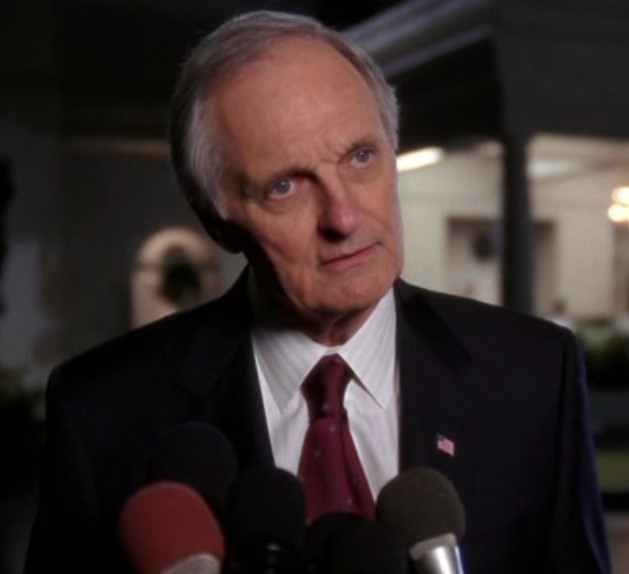
It wouldn't be a post this long without a reference to The West Wing, so I'll finish by paraphrasing the views of the irreligious Republican Senator Arnold Vinick of California:
Our state education system can teach our children many things from science to the humanities and the arts, but if you want to teach your child about religion, please... go to church.

Thursday, 24 May 2012

Here Comes the Summer

It's been quite a while since my last post, but now the exams are out the way, third-year is done and the summer weather is here! Plenty news and much to look forward to.

First up I managed to secure a placement at a law firm in Aberdeen over the summer. Having fired off countless applications for summer work it was brilliant to be able to secure something. I was hoping to find something for a fortnight or so but really struck lucky as this placement will run for six weeks and it's being paid to boot.

Not long after that's over I'll be heading off to Belgrade to take part in the European Universities Debating Championships. I eventually got involved in Uni debating this year and wish I'd done so much sooner. After a couple of competitions and internal trials I secured my place and will be debating with Michael Gray (@GrayInGlasgow) who's a smart lad and great lateral thinker. He's also somewhat a perennial blogger on all things Scotland, including on the important constitutional and social questions facing us. Take a look here. In any case it will be an adventure heading to Serbia and with the GUU funding our teams there'll be more Serbian dinars for refreshments...

As soon as I get back from Serbia I'll be going straight into a two week placement at the Law Department of the Church of Scotland in Edinburgh. I did a school work experience placement shadowing a few people with the General Trustees a few years ago so it will be good to go back in a more active capacity.

So that's what I've got lined up for the summer. It will be busy but looking forward to it.